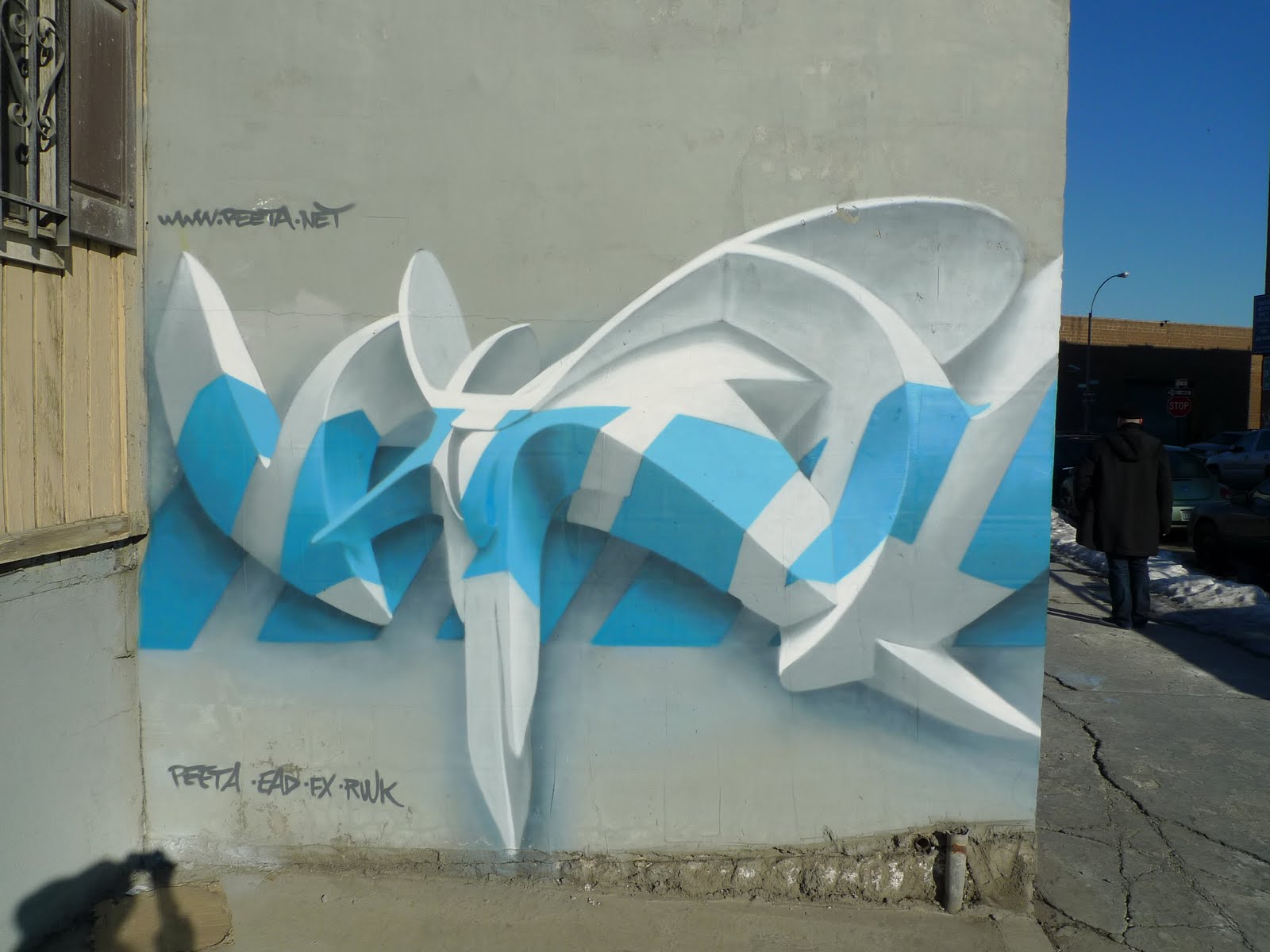
Judith Supine is working away... Looks Amazing!!!


NINA MILNER, 23: I was in the next room, when I heard, “Roll, roll, roll, roll!!” And then I walked in and looked at everyone and said, “Guys, what’s on fire?” I looked in the corner, and Spanky was there just quivering. And I had given him a tattoo on his ribs the night before that was kind of burnt. Once he got home, it was just up, up and away. Psychologically, he was just so happy to be home from the hospital. It was traumatic dressing those wounds. And it’s so difficult to feel all of the little involuntary spasms that someone you love makes when you are causing them great pain. Now that the scars are subsiding, the tattoo’s still totally there.
Friend of the gallery,artist and skate boarder Spanky Long was burnt by accident by a friend.

 Friend, artist and architect extraordinaire- Barbara Bestor will be having an opening on April 1
Disco Silencio!
Disco Architecture encourages
visual excess and explores the
space between social promiscuity
and solipsistic trance. The Silent
Disco employs technologies of
superfi cial deception inspired by
Razzle Dazzle camoufl age. This
WW1 military technique used bold
graphic and anamorphic surfaces
to mislead enemy bombers about
the size, speed and direction of a
warship. Within our constructed
space this defl ective graphic
strategy is conjoined with the
refl ective effect of embedded mirror
ball fragments, whose strategy is to
distort the visual space by refracting
light - a hybrid of military and disco
architectures of surface.
Disco Refugio?
This disco is a refuge, providing
respite from the institutional
production of architecture with a
program that stimulates communal
exchange. When unfolded, the shape
of this overscale three-dimensional
form reveals a dance fl oor that invites
the social and engages the physical-
a polyhedron of hedonism. The
plywood panels appear to advance
and recede within the space,
obscuring the parameters of the
disco and offering up multiple spatial
possibilities based on the visual
perception of form. The silent disco
is a stealthy architecture, imbued
with disinformation of literal form.
Disco Colludo!
In real time the silent disco has a day and nightlife of its own. By day the
refl ective surfaces capture and refract rays, populating the space with a
silent volume of light, both tranquil and kinetic.
By night the disco has
many programs- including a downloadable soundtrack and dance parties
with dj kitty kat, lasers, projections and fog. Like any other club, the
disco silencio’s geometry naturally offers back rooms and dark corridors,
an alternative refuge to the visual din of the dance fl oor.
April 1 - May 15
SCI-Arc Gallery Exhibition


Retna, whose real name is Marquis Lewis, began incorporating writing-influenced design patterns into his work in the mid- to late-’90s, as a steady stream of news about tension in the Middle East exposed him to the beauty of Arabic and Hebrew writing. His early works featured patterns based on both languages, often surrounding stylized portraits. Over time, he incorporated Asian calligraphy and South American and Egyptian glyphs, transforming the written languages of ancient cultures into an intriguing new form of contemporary art.
This show, which is presented by Andy Valmorbida and Vladimir Restoin Roitfeld and sponsored by Bombardier Business Aircraft and VistaJet, features more than 30 of Retna’s pieces, many of which deal with death and the lives of people he’s been inspired by. In a telephone interview last week, Retna discussed his influences, goals, and the true meaning of Hallelujah.
BlackBook: How did you start using foreign writing in your paintings?
Retna: I’m a graffiti writer, so I’m a fan of writing and I find it very beautiful. A lot of my earlier work had to do with what was happening in the news about the Middle East, so the Arabic and Hebrew writing found its way into my work.
What kind of work can people expect at 560 Washington Street?
It’s a collection of paintings I brought with me. A lot of what I write has to do with death and waiting for that time, and for people who have passed away. They’re reminders, conversations that I have with myself. They’re not meant to scare people, but at the same time they’re not meant for too many people to understand. I acknowledge things that have happened.

This is the first stop on your world tour. Will other cities get the same collection of paintings?
Each city gets their own batch of paintings. I think New York is a strong city so I give you the stronger shit, the stuff that means the most to me. It has to do with death, pain, and struggle. Friends of mine who have been killed or killed themselves. I give New York what I expect New York to give me back.
Your work shows influences from many different cultures, often in the same piece. Where does your own culture come in?
I’ve been influenced by the world, really, but I never completely fit in anywhere myself. I want people to take away something from their own culture in my work.

This collection doesn’t feature any portraits, but I was wondering how you decide who to feature and how to paint them.
It’s kind of hard for me to answer that. They’re spiritual, they’re strong. There’s a little bit of vulnerability but not too much. A lot of them deal with women who are powerful and elegant. I’m influenced by Art Nouveau and Gustav Klimpt, and what I do is a stylized version of that. I’ll also paint homeless people or gangsters because I’m just attracted to people in general. If something about them fascinates me I’ll paint a portrait or a mural.
So there’s a lot of pain in this collection?
It’s text-based conversations about death, yeah. You can tell New York I apologize for that. I don’t mean it in a bad way, but it’s something that means a lot to me, something I’m working through, a meditation process where I tell these people I won’t ever forget what they meant to me and the impact they’ve had on my life. I don’t expect my pain to be someone else’s burden, but I can’t help if people take it that way.

Do you believe in an afterlife?
No one really has the answer, but I want to think that there’s an afterlife, and I do. I plan on getting back with a couple of friends. We have some things to attend to. Maybe if I believe it strongly enough, I’ll actually get it.
Where did the name come from? What does Hallelujah mean to you?
I actually didn’t come up with it, it’s from the show organizers. The “Hallelujah World Tour” sounded strange to me at first because the world tour part was weird. But hallelujah means joy and thanks, and I have taken a lot from this world and this culture, so it was time I acknowledged it. You can’t take take take all the time. At some point you have to give back. And maybe it was to make people happy. Hallelujah. It’s a good word and I didn’t want to do it a disservice. If I can be honest in the work I can have the good fortune to use that word as the title of the show.
What have you been doing in New York besides working on this installation?
I went to the George Condo show at the New Museum, which was good. And other than that I’ve been absorbing all the great arts and culture that the city has to offer. And I did go to the Rose Bar & Jade Bar the other night at the Gramercy Park Hotel which was cool, with Basquiats and Hirsts on the walls. I like lounges because they’re mellow. I’m so tired by the end of the day I just want to have a drink and chill.
Sweatheart - Dream Beaver - Music Video from Andrew Jeffrey Wright on Vimeo.


 Posts
All Comments
Posts
All Comments